A story from Between Restless Jews and Weary Arabs
Arabs, a source of quiet sorrow
In 2010, I visited the Nemrud Dag historic site, which is perched in the mountains between the Tigris and Euphrates in southeastern Turkey, not far from the Syrian border. The proud Turkish guide who led our group said, while we headed to the mountaintop, "Look to your left, you'll see a large expanse of water beyond the cultivated field. The world's largest dam system is being constructed there. After its completion, this area will become a paradise."
"What about the downstream countries of Syria and Iraq, which depend on the two rivers for their crops and farms?" I asked him. As he didn't answer, I added, "They're complaining they're not receiving their fair share of water. Yet they're mostly Muslims too!"
"They would be better off if Turkey ruled them! That bunch of desert nomads had it much better under Ottoman rule!" he exclaimed. "Let's face it! Arab countries are a drag on the world."
I looked at him with dismay. Some thoughts came to my mind: Syria and Iraq were the cradle of civilization. It is where human history began. Then how is it that the once-glorious Arab peoples have come to be held in such low esteem by a Turkish guide! And why is it so? And why was the Turkish man so proud of his country when many Arabs are not? What happened following the Golden Age of Islam, when Baghdad was the world center of science, math and universities?
I remember once I was at Hervé's place. He had invited a few of his friends from the locality. We had a discussion in which North Africa and specifically Algeria came up:
"The Ottoman occupation lasted more than three centuries. If we try to locate on a map the infrastructure and hospitals the Turks bequeathed to Algeria, we cannot find any. The Ottomans managed to maintain the chaotic shantytowns or souqs in Arab cities they had occupied as they saw them when they arrived! In 1962, France left a country equipped with magnificent roads, dams, research centers, and a modern TV channel. The French treated typhus, malaria, and smallpox, etc. They squandered all of it."
Another person in the group said:
"Algeria could have been a rich country if only it had kept its 'Pieds-Noirs' (French and other Europeans who left Algeria), a dynamic group perfectly suited to local conditions. They included industrialists, doctors, and teachers, as well as priceless talents running the power grid and communications. They were expelled. The slogan at the time was: 'the suitcase or the coffin.'"
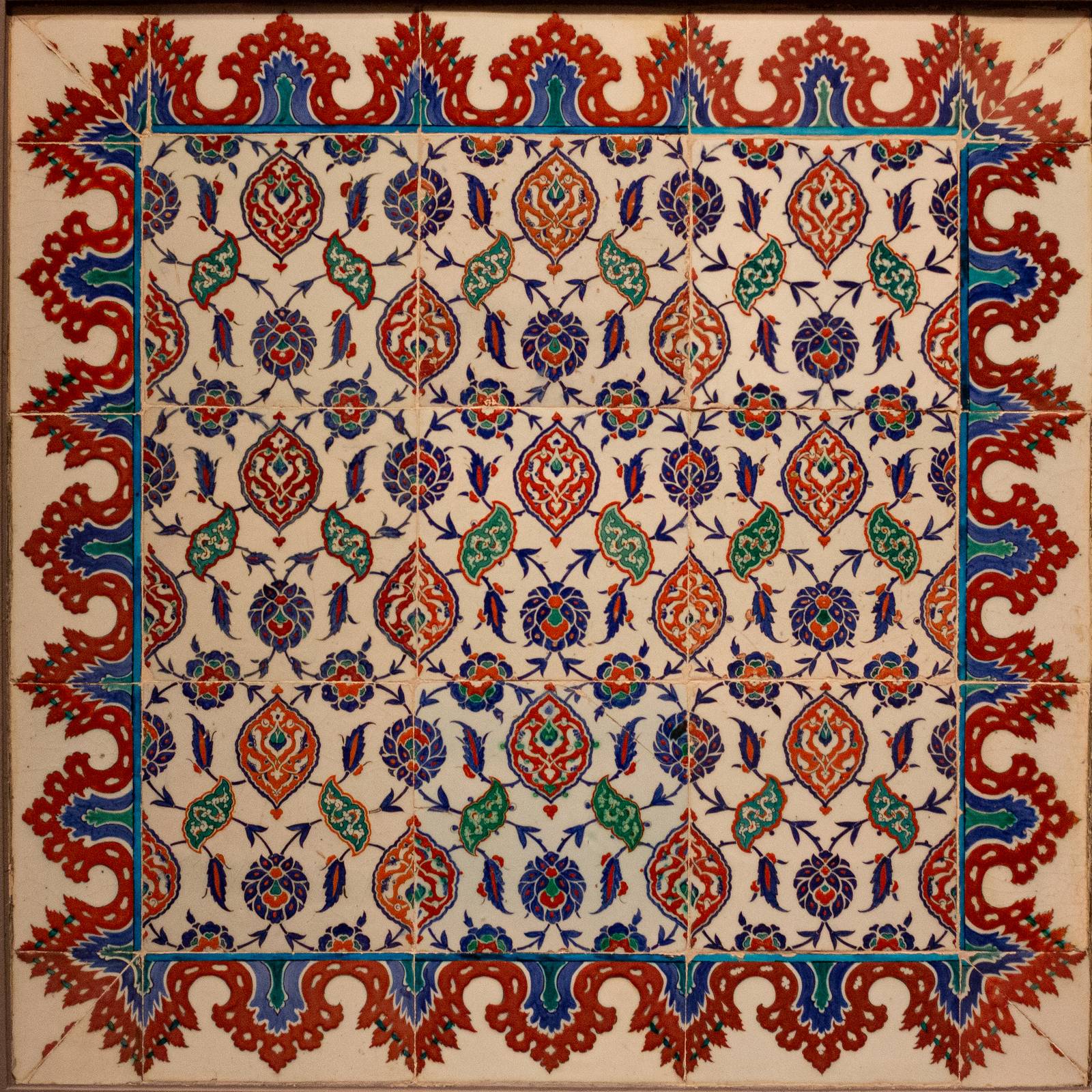
Background: Iznik tile panel with a floral lattice Tile panel, Iznik, Turkey, second half of the 16th century. The Metropolitan Museum of Art (public domain)